
Beyond the Label: Why Food Safety Starts Long Before the Shelf-Life Date
When most people hear the word 'food safety,' they think of expiry dates, gloves, or hairnets. But behind every “use-by” label lies an entire science of risk control, microbiology, and manufacturing discipline.
Food safety begins long before a product reaches the shelf; it’s embedded in ingredient sourcing, sanitation programs, equipment design, and packaging choices. Every step, from how raw materials are handled to how products are stored and transported, contributes to whether a food remains safe and stable throughout its intended life.
For food brands, getting food safety right isn’t just about ticking regulatory boxes; it’s about building consumer trust, maintaining consistent product quality, and safeguarding long-term brand reputation. In an era where one recall or negative review can spread instantly online, a proactive, science-based food safety culture is not just smart risk management; it’s a competitive advantage.
1. The Food Safety Chain Starts Before Production
Every safe product begins with the right formulation and supplier control. Ingredient quality, pH, water activity (aw), and microbiological load all influence how long a product remains safe. For example, changing one supplier’s spice blend can alter the microbial profile of a ready meal. That’s why a robust supplier approval and raw material verification program is a must-have before any mixing begins.
Tip: Map your ingredient risks using a HACCP-style hazard analysis, even for small-batch or pilot products.
2. “Use-By” vs “Best-Before”: More Than Just Dates
Date marking tells consumers when to use a product safely, but the real work happens behind the scenes. Validating a use-by date means scientifically proving, through shelf-life testing, that your product stays within safe limits throughout its storage. Temperature, packaging, and product composition all play a role. Get this wrong, and you risk spoilage, recalls, or consumer illness. Get it right, and you protect your reputation.
Pro insight: If you reformulate, change packaging, or extend distribution, re-validate your shelf life, assumptions don’t last forever.
3. Hygiene and Process Control: Your Daily Defence
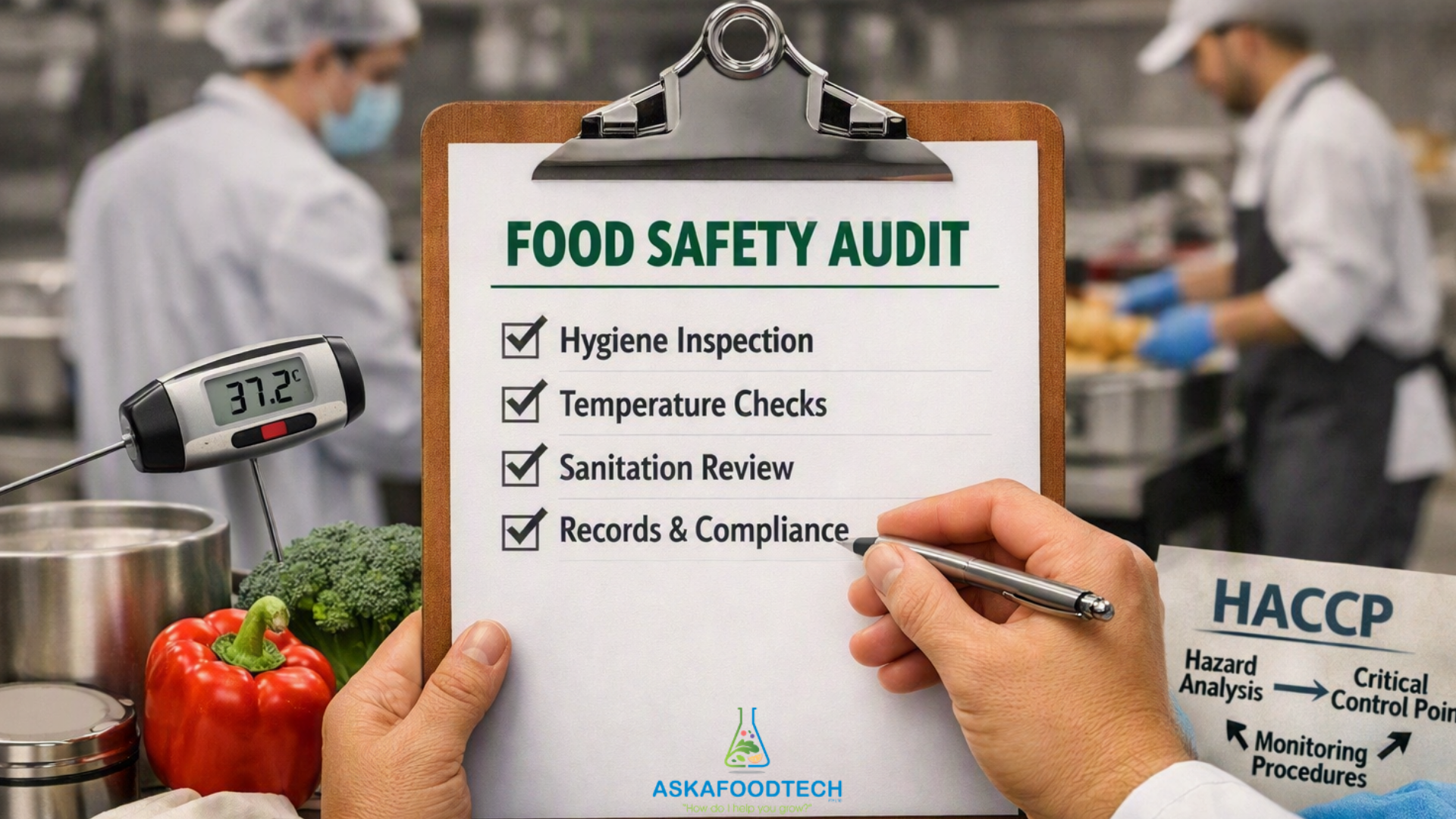
From handwashing to equipment clean-in-place (CIP), hygiene discipline is where most food safety wins (or fails). Small lapses, like missed sanitation or temperature checks, can undo the best formulations. Consistent GMP (Good Manufacturing Practice) and HACCP monitoring ensure safety barriers work in real time.
ASKAFOODTECH tip: Review your CCP (Critical Control Point) monitoring logs weekly. Patterns of drift, like slow pH rise or cooler temperature hold failures, often signal bigger issues before they become crises.
4. Packaging: The Silent Safety Partner
Packaging doesn’t just look good, it protects your product. Barrier strength, seal integrity, and oxygen transmission rates directly affect microbial growth and oxidation. Even “eco-friendly” packaging choices must be validated for their safety performance.
Example:
A plant-based film might reduce plastic use, but if it increases oxygen ingress, your chilled product may spoil days sooner.
5. Building a Culture of Food Safety
The most effective food safety systems are driven by people, not paperwork. When every team member, from QA to line operators, understands why controls matter, compliance becomes second nature.
Regular training, visible leadership, and practical tools (like checklists, micro-testing calendars, and hygiene audits) turn food safety from a tick-box to a shared responsibility.
Conclusion
Food safety isn’t a department; it’s a mindset that starts at product conception and runs right through to your consumer’s fridge. Brands that treat it as part of their innovation and quality DNA don’t just avoid recalls; they build trust, loyalty, and long-term success.
Need a quick Food Safety Validation Checklist for your next product run?
👉 Contact ASKAFOODTECH or comment
“SAFETY” on our latest post, and we’ll send it straight to you.

About the Author:
Stewart Eddie (Bapp Sc Food Science & Technology) is Director and Principal Food Tech at ASKAFOODTECH PTY LTD; a food technology consulting company that inspires, educates, and serves food producers with an ambition to grow and manage risk. Living with a severe food allergy and being a food technologist, Stewart is uniquely placed to help your food manufacturing business with your allergen management planning. If you would like more information on the services that ASKAFOODTECH PTY LTD can provide, please
contact us.