
1. Dairy Free - Dark Chocolate Tub... This might be a surprise to you that a non-fruit product gets no 1 spot on my list, but this product wins hands down this product was a 'labour of love', 4 years in the making.
A Decade-dent collection
June 21, 2021
In 2020 I passed a milestone at Weis that coincides with the turn of the decade. So, I thought I’d share with you my 10 favourite products my team have helped to launch over the past 10 years.
10. Sneaking onto the list - the reduced sugar yoghurt range... taking sugar out of ice cream presents a significant challenge to flavour and texture.
9. Passionfruit and Orange Sorbet... Everyone remembers their first product at a new company, right? This was a throwback to my childhood when I’d quench my thirst on a hot summers’ day with a local juice of this combo.
8. Cafe Latte Bar... Coffee ice cream combined with vanilla bean ice cream; how can you go wrong? This was launched in the Weis for Dessert mini range from a proven recipe developed some years earlier.
7. Dairy Free Raspberry and Coconut Bar... Featuring Australian raspberries and dairy free coconut portion this was our first dairy free offer for our Airline clients.

6. Pineapple Lime & Coconut Ice Cream Bar... Aside from Mango, what says summer like pineapple and coconut.....yum!
5. The Original Creamy Frozen Yoghurt Range... Ok I hear you, it’s not one product it’s a range, but Weis was able to create a way to incorporate a frozen yoghurt product into its portfolio. My absolute favourite of this range was the Lemon myrtle version...
4. Lychee sorbet... This one tasted like you were eating fresh lychees...it was refreshing and delicious
3. Chocolate Coconut Rough Ice Cream Bar... A chocolate ice cream with luscious coconut ice cream topped with toasted coconut. All things lamington is huge these days. This one was ahead of its time and delicious

2. Passionfruit & Coconut Ice Cream Bar – a recent addition... A zingy passionfruit portion with a dreamy coconut ice cream layer... Simply delicious!
And now...
Drum roll please!


About the Author:
Stewart Eddie (Bapp Sc Food Science & Technology) is Director and Principal Food Tech at ASKAFOODTECH PTY LTD; a food technology consulting company that inspires, educates, and serves food producers with an ambition to grow and manage risk. Living with a severe food allergy and being a food technologist, Stewart is uniquely placed to help your food manufacturing business with your allergen management planning. If you would like more information on the services that ASKAFOODTECH PTY LTD can provide, please
contact us.
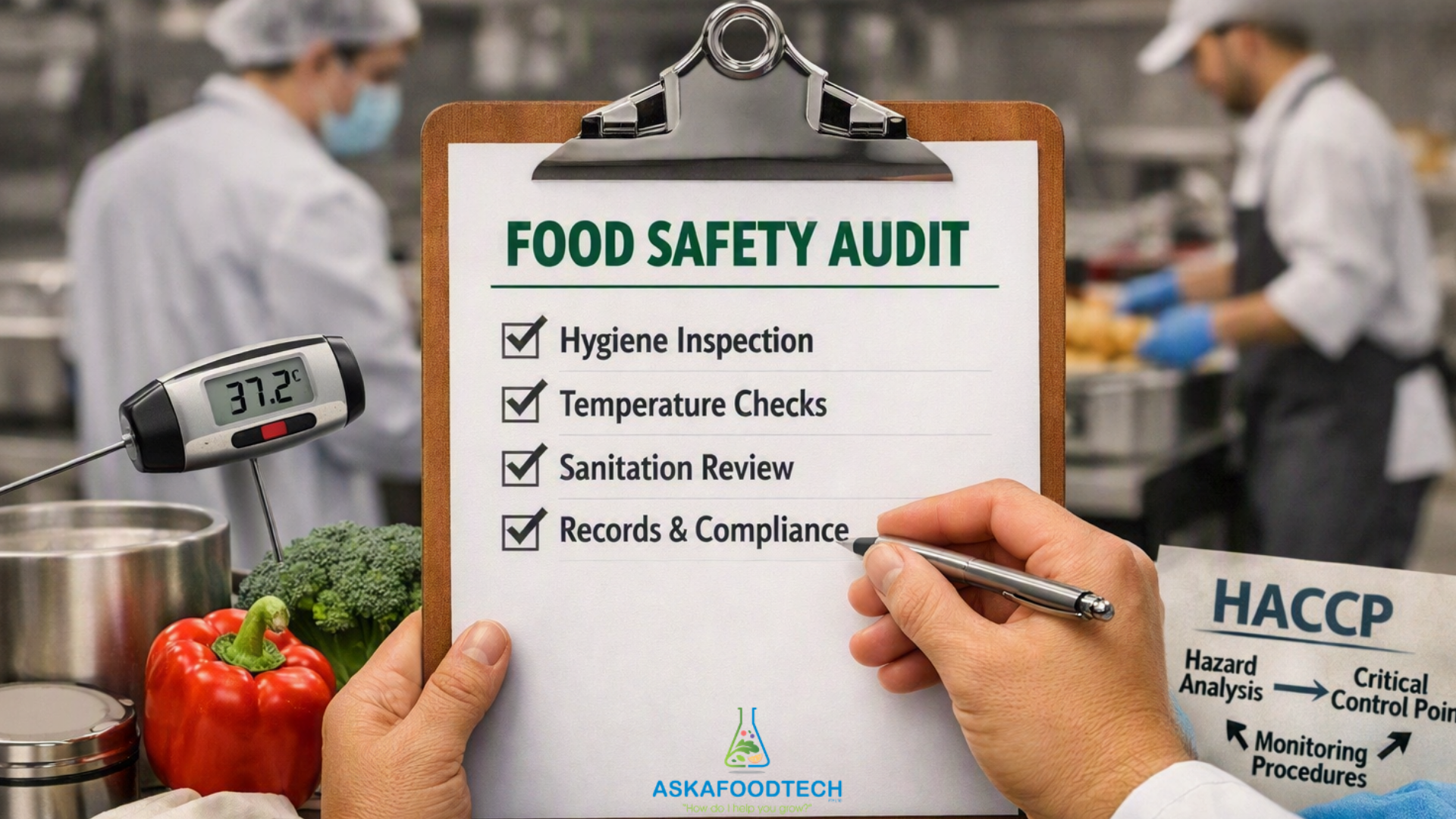
To reiterate, every July, Food Safety Month serves as a timely reminder for the industry to audit protocols, refresh staff training, and deep clean our facilities. But for those of us who have spent years on the factory floor, the conversation in July; and every other month; often returns to one persistent, formidable challenge: Listeria monocytogenes. Having extensive experience in quality systems and production lines in various dairy factories, I’ve seen firsthand how Listeria spp. can be a persistent headache. It is not just a bacteria; it is an opportunist. It finds the corners, the floor drains, and the microscopic imperfections in equipment that we overlook. In the dairy sector, where moisture and protein-rich environments are the norm, this pathogen isn't just a risk; it is a constant hazard. At ASKAFOODTECH, we know that managing Listeria requires shifting from a "clean and hope" mentality to a "seek and destroy" philosophy. Why Dairy is the Perfect Stage for Listeria Dairy processing environments provide the ideal habitat for Listeria monocytogenes . It thrives in cool, moist conditions and is remarkably resilient. Unlike some pathogens that can be easily washed away, Listeria forms biofilms, protective, invisible shields on equipment surfaces that allow it to survive standard sanitation cycles. If your facility isn't actively hunting for it, you might be creating a breeding ground without knowing it. Moving Beyond Compliance To move beyond basic regulatory compliance and truly protect your brand, you need a data-driven strategy that mirrors how we’ve tackled these threats in the field for over two decades. Environmental Monitoring (EM) as a Primary Defence: Stop waiting for a product recall to tell you there is a problem. Shift your focus to proactive environmental monitoring. You need to be testing the environment—drains, floor-wall junctions, refrigeration units, and equipment crevices. The "Niche" Hunting Technique: Listeria loves what I call "niche" areas. These are the hard-to-reach spots, such as the underside of conveyor belts, hollow rollers, or cracks in slicers. If you are not dismantling equipment for deep-cleaning inspections, you are leaving the door open. Rapid testing techniques such as ATP can assist in providing instance cleaning validations. Hygienic design of equipment is also a crucial part of the defence. Zone Defence & Traffic Control: Pathogen control is about geography. Create rigid separation between raw and ready-to-eat (RTE) zones. This includes dedicated tooling, color-coded equipment, and strict traffic flow protocols for staff. If a maintenance worker moves from a drain area to a high-care filling line without proper sanitisation, your barrier is broken. Biofilm Management: Standard sanitizers often fail to penetrate established biofilms. Your sanitation program must include periodic "shock" treatments including alternating chemistry and deep scrubbing protocols to break down these defensive layers and expose hidden bacteria. Safety as a Brand Asset Managing Listeria shouldn't be viewed as an administrative burden or a "cost of doing business." It is an investment in your integrity. In the Australian market, where discerning consumers value quality and safety above all else, a robust, scientifically validated pathogen control program is one of the most powerful marketing tools you have. It says to your community: We take responsibility for what we put on your table. Let’s Audit Your Defence Is your current food safety program designed to catch Listeria before it catches you? I’ve spent my career navigating these risks in dairy plants, and I know where the blind spots usually hide. If you want to move from reactive cleaning to proactive protection, let’s talk. At ASKAFOODTECH, we help dairy processors build safety systems that are as sophisticated as the products they create. Contact ASKAFOODTECH today
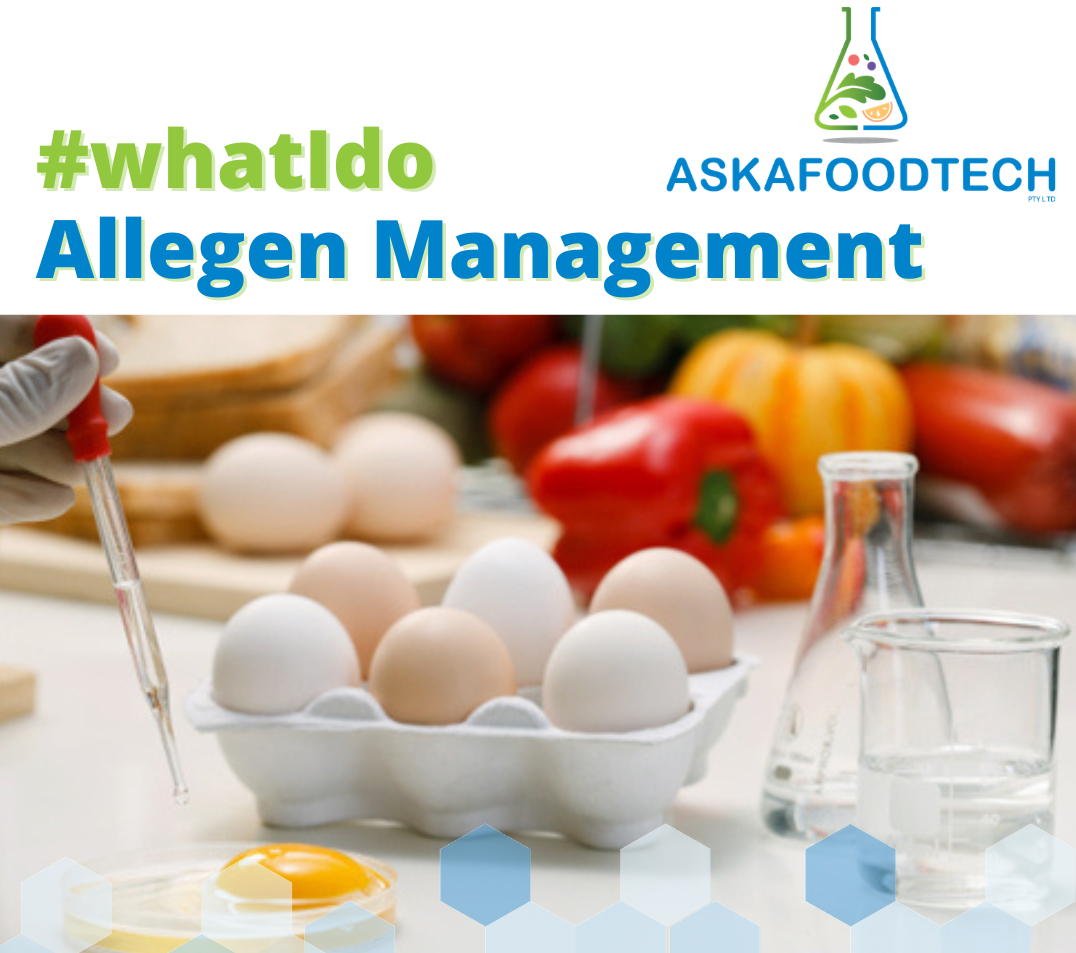
Food Allergy Awareness Month in May serves as a critical reminder: in the food industry, compliance isn’t a task, it’s a life-saving mission. As award-winning food technology consultants, we at ASKAFOODTECH understand the intense pressure on producers to manage risk while innovating. Your commitment to allergen management protects your consumers, builds brand trust, and is fundamental to your legal and ethical responsibilities. With updated regulations under the Food Standards Code (FSANZ) demanding greater transparency, now is the time to audit your processes. Led by Stewart Eddie, a food technologist with over 20 years of hands-on experience, we simplify this complex landscape. This month, let’s focus on the four critical steps required to build a truly robust, compliant allergen management system. Australia’s Food Business Landscape: Real Progress, Real Impact Recent industry findings show major shifts in how Australian food companies manage, measure, and prevent food waste. One of the most impactful initiatives has been the Australian Food Pact, a voluntary collaboration bringing together manufacturers, retailers, producers, and food rescue organisations. Between 2022 and 2024, Pact signatories achieved a 13% reduction in food waste, representing 16,000 tonnes saved and $57 million in economic benefit. This was achieved through a structured Target, Measure, Act framework, helping businesses map their waste streams, identify hotspots, and trial practical interventions. The improvements go beyond cost savings; they’re reshaping the sustainability landscape. Companies involved have collectively prevented 505,000 tonnes of CO₂-equivalent emissions, equal to removing 210,000 cars from the road for a year. On top of that, 254 million meals have been donated to food rescue organisations, diverting edible food to communities that need it most. These results signal a growing trend: waste is no longer an unavoidable cost; it is a controllable, measurable, and optimisable part of operations. The Rise of Upcycling and Advanced Food Waste Solutions For decades, food waste has been treated as a by-product, but 2026 marks a turning point. The CSIRO, in collaboration with the University of Leeds, is leading groundbreaking research into turning agrifood waste into high-value protein ingredients. Their project uses AI to determine optimal fermentation conditions for transforming unpicked vegetables, grain by-products, and cheesemaking residues into sustainable protein powders. This innovation could help Australia convert millions of tonnes of nutrient-rich waste into market-ready food ingredients. These advancements reflect a broader industry shift: waste streams are becoming revenue streams. Upcycling is no longer niche; it’s a viable, scalable pathway that aligns with consumer demand, regulatory expectations, and climate targets. Why Sustainability Matters More Than Ever in 2026 Australian consumers increasingly choose brands that demonstrate environmental responsibility. According to industry insights, nearly half of Australian shoppers factor sustainability into purchasing decisions, making waste reduction not only good for the environment, but also a competitive advantage. At the same time, new expectations are emerging across the supply chain: • Retailers want transparent sustainability reporting • Export markets are demanding traceability and emissions data • Food rescue organisations need better redistribution partnerships • Governments are tightening landfill and emissions regulations The Australian Food Pact’s achievements, including more than 982,000 tonnes of food repurposed through rescue and upcycling programs, highlighting the growing ecosystem supporting businesses on this journey. The Reality Check: Australia Still Wastes 7.6 Million Tonnes Annually Despite major progress, Australia still discards 7.6 million tonnes of food every year, enough to fill the MCG ten times over. This presents both a challenge and an opportunity. While high-performing businesses are reducing waste through measurement, technology, and collaboration, many still lack: • Accurate waste data• Clear action plans • Staff training on waste management • Optimised packaging • Shelf-life validation • Upcycling pathways • Energy-efficient processes April offers a timely reminder: sustainability isn’t a marketing exercise; it is operational excellence. What Australian Food Producers Should Focus on This April To stay ahead of regulatory and market expectations, food businesses should prioritise: 1. Waste Mapping & Measurement Use tools aligned with the Target, Measure, Act framework to quantify losses and identify root causes, a strategy used successfully by leading Pact members. 2. Upcycling Feasibility Explore transforming by-products into new product lines — backed by CSIRO-led research. 3. Packaging and Shelf-Life Optimisation Better packaging choices and validated shelf-life studies minimise waste and boost product quality. 4. Cross-sector Partnerships Collaborate with food rescue organisations to redirect edible surplus. Many businesses have saved millions through donation programs. 5. Energy & Water Efficiency With climate-related supply chain pressures increasing, efficiency measures support both sustainability and resilience. A More Sustainable Future for Australia’s Food System This April, the message is clear: Australian food businesses are proving that reducing waste isn’t a burden - it’s an opportunity. From industry-wide collaboration through the Australian Food Pact, to CSIRO’s AI-driven breakthroughs, to the rise of upcycling and sustainable packaging, the sector is moving toward a future where waste is minimised, value is maximised, and sustainability is embedded in every stage of production. As the nation pushes toward its target of halving food waste by 2030, April is the perfect time for businesses to evaluate their sustainability strategies — and invest in the practices that will define the industry’s next decade. Are you with us? Contact ASKAFOODTECH today
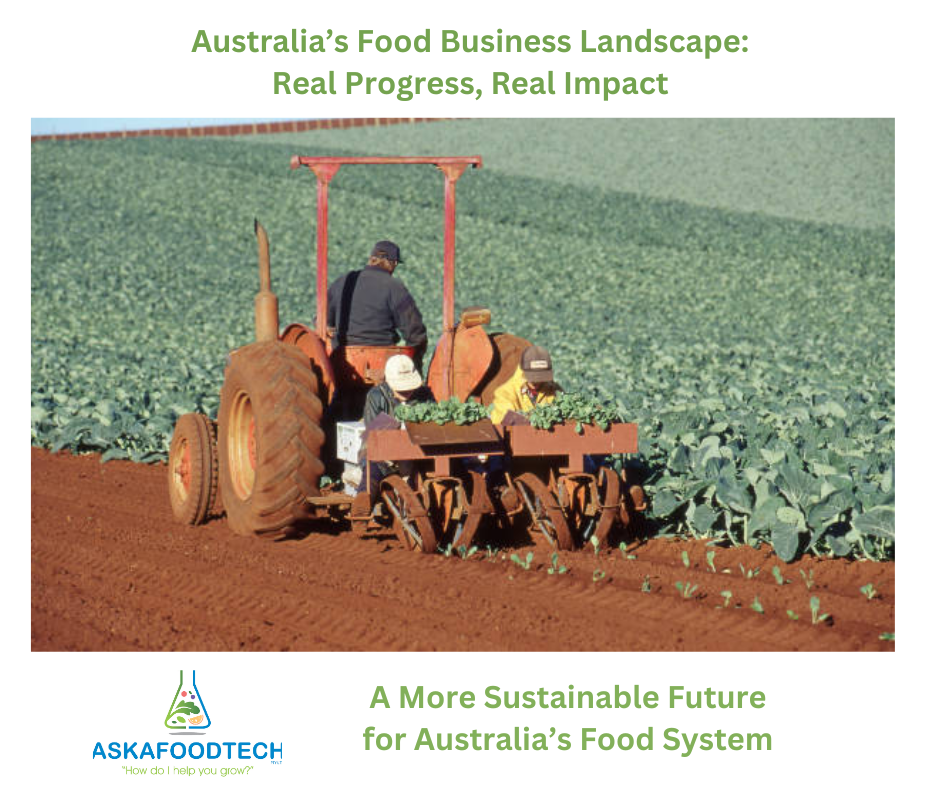
Australia is in the middle of a rapid sustainability transformation, and the food industry is at the centre of it. As April marks Sustainability & Food Waste Month, food manufacturers, producers, and retailers have more pressure (and opportunity) than ever to rethink waste, streamline operations, and adopt circular practices. Over the past two years, Australia has made significant measurable progress, with multiple reports showing momentum across the entire supply chain. Australia’s Food Business Landscape: Real Progress, Real Impact Recent industry findings show major shifts in how Australian food companies manage, measure, and prevent food waste. One of the most impactful initiatives has been the Australian Food Pact, a voluntary collaboration bringing together manufacturers, retailers, producers, and food rescue organisations. Between 2022 and 2024, Pact signatories achieved a 13% reduction in food waste, representing 16,000 tonnes saved and $57 million in economic benefit. This was achieved through a structured Target, Measure, Act framework, helping businesses map their waste streams, identify hotspots, and trial practical interventions. The improvements go beyond cost savings; they’re reshaping the sustainability landscape. Companies involved have collectively prevented 505,000 tonnes of CO₂-equivalent emissions, equal to removing 210,000 cars from the road for a year. On top of that, 254 million meals have been donated to food rescue organisations, diverting edible food to communities that need it most. These results signal a growing trend: waste is no longer an unavoidable cost; it is a controllable, measurable, and optimisable part of operations. The Rise of Upcycling and Advanced Food Waste Solutions For decades, food waste has been treated as a by-product, but 2026 marks a turning point. The CSIRO, in collaboration with the University of Leeds, is leading groundbreaking research into turning agrifood waste into high-value protein ingredients. Their project uses AI to determine optimal fermentation conditions for transforming unpicked vegetables, grain by-products, and cheesemaking residues into sustainable protein powders. This innovation could help Australia convert millions of tonnes of nutrient-rich waste into market-ready food ingredients. These advancements reflect a broader industry shift: waste streams are becoming revenue streams. Upcycling is no longer niche; it’s a viable, scalable pathway that aligns with consumer demand, regulatory expectations, and climate targets. Why Sustainability Matters More Than Ever in 2026 Australian consumers increasingly choose brands that demonstrate environmental responsibility. According to industry insights, nearly half of Australian shoppers factor sustainability into purchasing decisions, making waste reduction not only good for the environment, but also a competitive advantage. At the same time, new expectations are emerging across the supply chain: • Retailers want transparent sustainability reporting • Export markets are demanding traceability and emissions data • Food rescue organisations need better redistribution partnerships • Governments are tightening landfill and emissions regulations The Australian Food Pact’s achievements, including more than 982,000 tonnes of food repurposed through rescue and upcycling programs, highlighting the growing ecosystem supporting businesses on this journey. The Reality Check: Australia Still Wastes 7.6 Million Tonnes Annually Despite major progress, Australia still discards 7.6 million tonnes of food every year, enough to fill the MCG ten times over. This presents both a challenge and an opportunity. While high-performing businesses are reducing waste through measurement, technology, and collaboration, many still lack: • Accurate waste data• Clear action plans • Staff training on waste management • Optimised packaging • Shelf-life validation • Upcycling pathways • Energy-efficient processes April offers a timely reminder: sustainability isn’t a marketing exercise; it is operational excellence. What Australian Food Producers Should Focus on This April To stay ahead of regulatory and market expectations, food businesses should prioritise: 1. Waste Mapping & Measurement Use tools aligned with the Target, Measure, Act framework to quantify losses and identify root causes, a strategy used successfully by leading Pact members. 2. Upcycling Feasibility Explore transforming by-products into new product lines — backed by CSIRO-led research. 3. Packaging and Shelf-Life Optimisation Better packaging choices and validated shelf-life studies minimise waste and boost product quality. 4. Cross-sector Partnerships Collaborate with food rescue organisations to redirect edible surplus. Many businesses have saved millions through donation programs. 5. Energy & Water Efficiency With climate-related supply chain pressures increasing, efficiency measures support both sustainability and resilience. A More Sustainable Future for Australia’s Food System This April, the message is clear: Australian food businesses are proving that reducing waste isn’t a burden - it’s an opportunity. From industry-wide collaboration through the Australian Food Pact, to CSIRO’s AI-driven breakthroughs, to the rise of upcycling and sustainable packaging, the sector is moving toward a future where waste is minimised, value is maximised, and sustainability is embedded in every stage of production. As the nation pushes toward its target of halving food waste by 2030, April is the perfect time for businesses to evaluate their sustainability strategies — and invest in the practices that will define the industry’s next decade. Are you with us? Contact ASKAFOODTECH today
As an award-winning Australian food technology consultancy, ASKAFOODTECH believes in proactive compliance—not just reactive crisis management. The annual food recall statistics released by Food Standards Australia New Zealand (FSANZ) are more than just numbers; they are a critical roadmap for every food producer aiming for market success and consumer trust. Our analysis of the latest decade of data reveals a clear and concerning trend: the average annual number of recalls is rising. This isn't necessarily a sign of a failing system—it often indicates better detection, increased regulatory oversight, and greater consumer vigilance—but it absolutely serves as a powerful reminder for businesses to strengthen their internal food safety and labelling systems. Top 4 Misconceptions and Their Ramifications: Here is ASKAFOODTECH’s breakdown of the key recall trends from 2020–2024 and how your business can turn this data into actionable strategies. 1. The Undisputed Number One Cause: Undeclared Allergens The most critical takeaway from the data is the continuing dominance of Undeclared Allergens , accounting for a staggering 48% of all recalls coordinated by FSANZ between 2020 and 2024. This isn't just a compliance issue; it’s a public health crisis risk. Key Allergen Statistics (2020–2024): Nearly Half of All Recalls: Undeclared allergens are the single largest reason for removing products from shelves. Top 4 Culprits: The most common allergens involved in recalls were Milk, Tree nuts, Wheat/Gluten, and Eggs. High-Risk Categories: The food types most frequently associated with allergen recalls are Mixed and/or processed foods and Bread and bakery products —categories where cross-contamination or ingredient oversight is highly likely. Detection Method: The most common trigger for identifying an allergen issue? Customer complaint. This means the problem has already reached the consumer, causing potential illness and guaranteed brand damage. ASKAFOODTECH's Guidance: This highlights a failure point in internal process control. Allergen management must be a core pillar of your food safety plan. We specialise in implementing rigorous Plain English Allergen Labelling (PEAL) compliance, reviewing your entire ingredient supply chain, and designing robust, validated cleaning procedures to eliminate cross-contact risk. Waiting for a customer complaint is waiting for a disaster. 2. The Constant Threat: Microbial Contamination The second leading cause of recalls, responsible for 20% of incidents from 2020–2024, is Microbial Contamination . These recalls involve the presence of harmful bacteria, viruses, or fungi that cause foodborne illness. Key Microbial Threats (2020–2024): Listeria monocytogenes (31% of microbial recalls): A persistent and dangerous pathogen, especially for vulnerable populations. Salmonella spp. (23% of microbial recalls): A pervasive risk in a variety of foods, often linked to raw ingredients. Escherichia coli (E. coli) (12% of microbial recalls): A clear indicator of hygiene or processing failures. ASKAFOODTECH's Guidance: Microbial control is fundamental food safety. If your business is seeing a pattern of microbial alerts, it’s time to audit your HACCP plan. We focus on temperature control validation, environmental monitoring, sanitation procedures, and pathogen mapping to identify and eliminate high-risk zones in your production facility. 3. Other Significant Causes While allergens and microbes dominate, other issues still contribute to a significant number of recalls: Foreign Matter: Plastic (40%), metal (25%), and rubber (13%) are the most common foreign materials, pointing to mechanical failures, poor material handling, or inadequate sieving and detection systems. Chemical Contamination: Recalls linked to Ethylene oxide and Thebaine demonstrate the necessity of meticulous supplier verification and control over raw material inputs and potential chemical cross-contamination. 4. Where Businesses are Taking Action After a recall, businesses are required to report the corrective actions they take. The top three actions reported between 2020 and 2024 were: Staff training (18%) Amended handling procedures (14%) Altering product labels (13%) Crucially, 83% of businesses reported taking more than one corrective action. This multi-faceted approach is exactly what is needed, focusing on people, process, and documentation. Turn Statistics into Strategy The Australian food recall data tells a story of systemic risks, primarily stemming from labelling errors and process control breakdowns . At ASKAFOODTECH, we translate this complex data into clear, actionable, and commercially sensible steps for your business. Are you confident in your food safety systems? Let us help you move beyond compliance to true confidence. Contact ASKAFOODTECH today for a comprehensive review of your Allergen Management Plan and Labelling Compliance strategy. * Data Australian food recall statistics | Food Standards Australia New Zealand
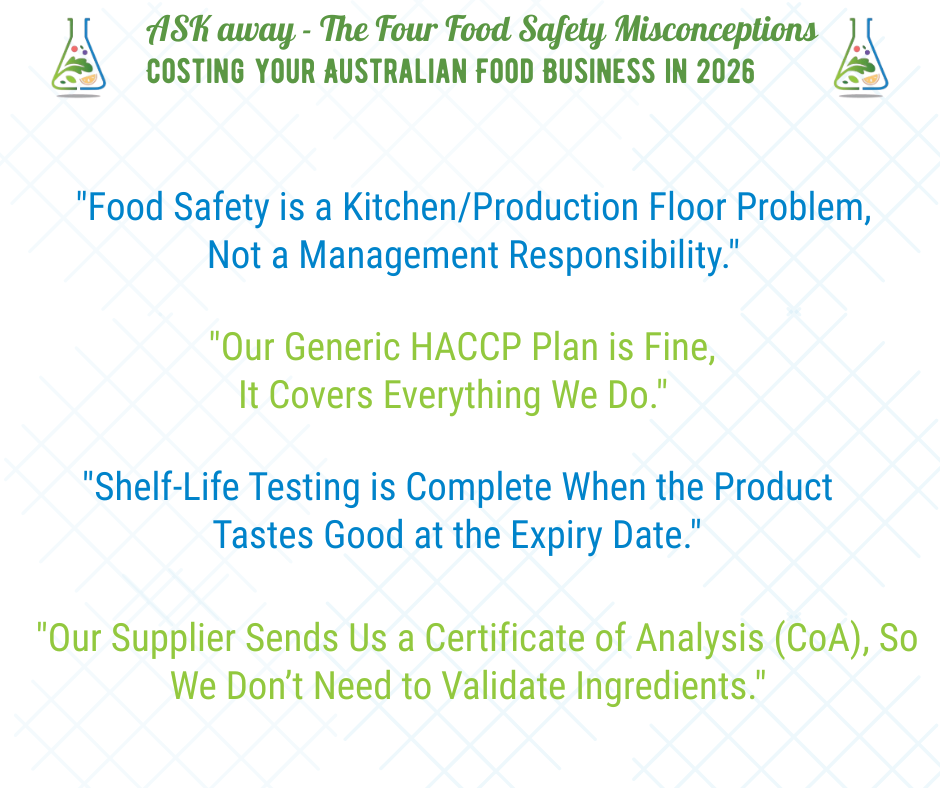
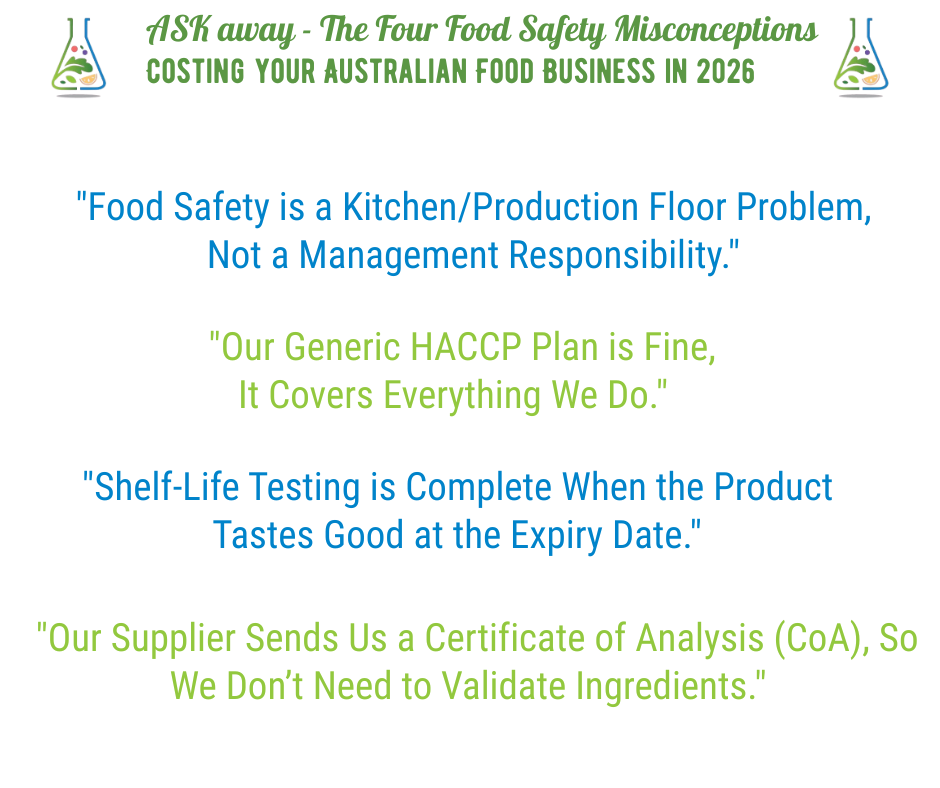
Food safety isn’t just about avoiding a fine; it’s the non-negotiable foundation of your brand’s trust, reputation, and long-term viability. As an Australian food producer, adhering to the Safe Food Australia standards (regulated by FSANZ) is mandatory, but compliance can often be clouded by common misunderstandings. In honour of Food Safety Month, ASKAFOODTECH is breaking down the top four dangerous misconceptions we see in the industry and revealing the true ramifications of non-adherence. Top 4 Misconceptions and Their Ramifications: "Food Safety is a Kitchen/Production Floor Problem, Not a Management Responsibility." Many businesses delegate food safety solely to production staff or quality control teams, viewing it as a checklist rather than a core business strategy. Ramifications of Non-Adherence (Lack of Leadership): Inadequate Resources & Training: When management isn't bought in, budget for proper training, modern equipment, and robust record-keeping systems often falls short. This leads to systemic failure points that Q.C. alone cannot fix. Failed Culture of Safety: Food safety must be driven from the top down. A weak safety culture increases the risk of critical errors, resulting in serious regulatory breaches, major product recalls, and even premises closure by state/territory food authorities. "Our Generic HACCP Plan is Fine—It Covers Everything We Do." HACCP (Hazard Analysis and Critical Control Points) is the backbone of safe food production, but a one-size-fits-all, off-the-shelf document is often insufficient for a complex, evolving operation. Ramifications of Non-Adherence (Generic Plans): Invisible Risks: Generic plans fail to account for the specific hazards of your unique equipment, new product formulations, process steps, or facility layout. This leaves significant and unmanaged risks in your critical control points (CCPs). Legal Vulnerability: In the event of a foodborne illness outbreak, regulators will audit your documentation. If your plan is generic and doesn't accurately reflect your actual process or the hazards encountered, your business may be deemed negligent, leading to severe fines and immediate public health orders. "Shelf-Life Testing is Complete When the Product Tastes Good at the Expiry Date." Sensory evaluation (taste, texture, smell) is only one part of shelf-life assessment. True compliance requires microbiological and chemical stability testing to prove the product is safe and compliant for the entirety of its life. Ramifications of Non-Adherence (Incomplete Shelf-Life Data): Unsafe Product in Market: A product can look and taste fine but still contain dangerous levels of pathogens (like Listeria or Salmonella) or toxins. Releasing a product with unproven safety is the fastest route to mass consumer illness and prosecution. Loss of Retail Trust: Major retailers demand robust, defensible shelf-life data. Without it, you lose credibility, cannot secure premium placement, and risk costly de-listing should a safety incident occur. "Our Supplier Sends Us a Certificate of Analysis (CoA), So We Don’t Need to Validate Ingredients." A CoA is important, but a due diligence defence under the FSANZ standard requires more than just receiving a piece of paper. Your business is ultimately responsible for the safety of its final product. Ramifications of Non-Adherence (Blind Trust): Allergen Cross-Contamination: Relying solely on a supplier's CoA for allergens without establishing clear receiving protocols, verification checks, or having an appropriate supplier approval program exposes your customers to undeclared allergens—the most common cause of Australian product recalls. Contaminant Risk: If a supplier's raw material fails to meet safety limits (e.g., heavy metals, pesticides) and you haven't validated their control measures, you are responsible for the contaminated product on Australian shelves.
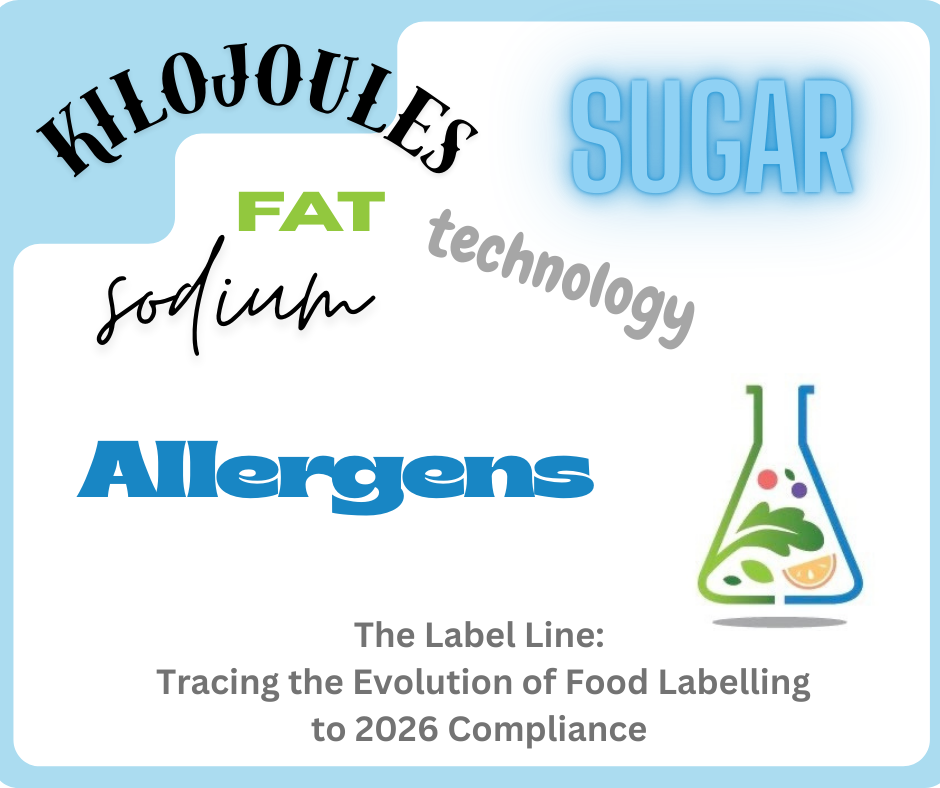
Food labelling has come a long way since the days of simple ingredient lists. What was once a basic legal requirement has evolved into a dynamic, complex, and vital tool for consumer safety, public health, and brand trust. For Australian food producers, understanding this evolution isn’t just interesting—it’s critical for compliance in 2026. At ASKAFOODTECH , we’ve spent decades guiding businesses through this shifting landscape. This Food Labelling Month, we’re looking at how the industry has changed and what you need to focus on right now, from Simple Lists to Scientific Mandates. The history of food labelling is a story of increasing transparency, driven by public demand and medical necessity. Early regulations focused primarily on preventing fraud - ensuring a product was what it claimed to be. The first major evolution began in the late 20th and early 21st century with the global rise in food allergies. Suddenly, an ingredient list wasn't just about what was in the food; it was about what must not be in the food for certain consumers. This shift mandated clearer, specific allergen declarations, moving from an implied duty to an explicit, bolded safety requirement. The introduction of the mandatory Nutrition Information Panel (NIP) marked the next giant leap. What was once optional became a requirement for public health. This empowered consumers to track kilojoules, fat, sugar, and sodium, transforming the label into a crucial dietary decision-making tool. The Pillars of Modern Compliance (2026) Today, compliance is no longer a static, once-off task. It’s a dynamic process influenced by technology, consumer scrutiny, and continually updated Food Standards Codes. In 2026, compliance rests on three key pillars: